Chard
A variety of beet, Beta vulgaris cicla, with large succulent leaves and thick stalks, used as a vegetable Also called: Swiss chard, leaf beet, seakale beet.

A variety of beet, Beta vulgaris cicla, with large succulent leaves and thick stalks, used as a vegetable Also called: Swiss chard, leaf beet, seakale beet.


Mustard greens have broad, wavy frilled leaves with longitudinal veins and a deep green color.The upright leaves are supported by coarse stems that can be quite fibrous when fully mature. Smaller leaves are considerably tenderer, while larger Mustard greens require cooking.


A broad leafed green plant, related to kale that is used as an ingredient in green salads, or as a vegetable to be served for a cooked vegetable dish, or combined and with other ingredients to be stir fried and served as part of a main dish.


Micro greens are young vegetable greens that are approximately 13 inches (2.57.5 cm) tall. They have an aromatic flavor and concentrated nutrient content and come in a variety of colors and textures. Micro-greens are considered baby plants, falling somewhere between a sprout and baby green.


| Product name | Anwar Ratol Mango |
| Style | Fresh |
| Grade: | ClassAAA |
| Cultivation Type | Common |
| Size (cm) | 12-16 |
| Place of Origin | Pakistan |


Allium cepa, the onion (also called bulb onion or common onion) and the shallot (Allium cepa var. aggregatum), is a monocot bulbous perennial (often biannual). It is a biennial plant but is usually grown as an annual. Modern varieties typically grow to a height of 15 to 45 cm.


The parsnip, Pastinaca sativa, is a root vegetable closely related to carrot and parsley; all belong to the family Apiece. It is a biennial plant usually grown as an annual. Its long, tuberous root has cream-colored skin and flesh, and, left in the ground to mature, it becomes sweeter in flavor after winter frosts.


The potato is a root vegetable native to the Americas, a starchy tuber of the plant Solanum tuberosum, and the plant itself is a perennial in the nightshade family, Solanaceae.


Radish, Raphanus sativus L., is an annual vegetable belonging to the family Cruciferae and is a traditionally important vegetable in many countries. The enlarged root and hypocotyl of radish are consumed mainly as a salted vegetable and are also eaten fresh as grated radish, garnish, and salad.
Radishes are a good source of vitamins C, folate and riboflavin (vitamin B2). They contain minerals such as calcium, potassium (which helps to regulate blood pressure) and manganese (involved in the regulation of brain and nerve function)


Shape is oval. Foliage is bluish green, smooth and edible (particularly when young). Rutabaga plants typically grow 12-24″ tall and 12″ wide. Within this same species, Brassica napus (Oleifera Group) is grown for vegetable oils (including canola) and Brassica napus (Pabularia Group) for its kale-like salad greens.


Sweet potato (Ipomoea batatas L.) is a major food crops in the subtropical regions of the world. Its large, starchy, and sweet tuberous roots are rich sources of starch, sugars, vitamin C, pro vitamin A, iron, and minerals.
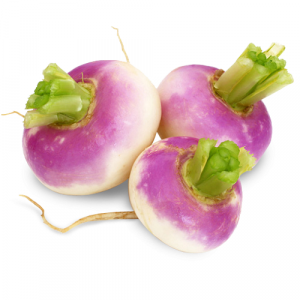

Turnip, (Brassica rapa, variety rapa), also known as white turnip, hardy biennial plant in the mustard family (Brassicaceae), cultivated for its fleshy roots and tender growing tops. The turnip is thought to have originated in middle and eastern Asia and is grown throughout the temperate zone.